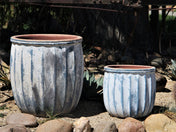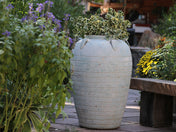


Two containers, same price, same glaze, same collection. One is tall and narrow. One is low and broad. They hold roughly the same volume of soil, so the choice can look purely visual.
But the shape actually decides quite a lot. Which plants will live in it, how often you water, how the soil behaves in a January freeze, and whether the whole thing stays upright in a March windstorm.
The way to settle tall planters vs wide planters is to work in a fixed order. Start with what you are planting, because roots have opinions. Then adjust for the space. Doing it the other way around is how people end up with a beautiful container holding a dying plant.
Tall Planters: When Are They the Better Choice?
Depth is what you are buying. A tall form gives roots somewhere to go down, holds more soil against a hot week, and dries out more slowly than a shallow container of the same volume.
That makes tall planters the right call for anything with a taproot or a woody root system. Small trees, standards, upright shrubs, ornamental grasses that throw a deep fibrous mass. These plants want vertical room below the soil line as much as above it.
Height also solves a spatial problem. In a tight courtyard or on a balcony, floor space is the scarce resource. A tall container uses the air instead, giving you real planting presence without eating the square footage you need for a chair. Tall planters for patios work best in corners and against walls where a wide container would block circulation.
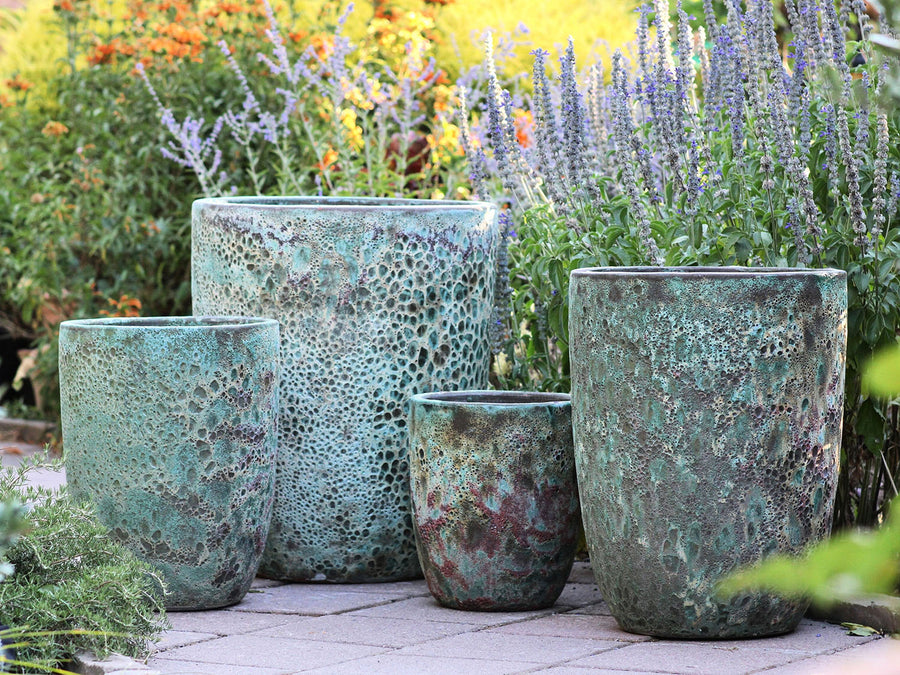
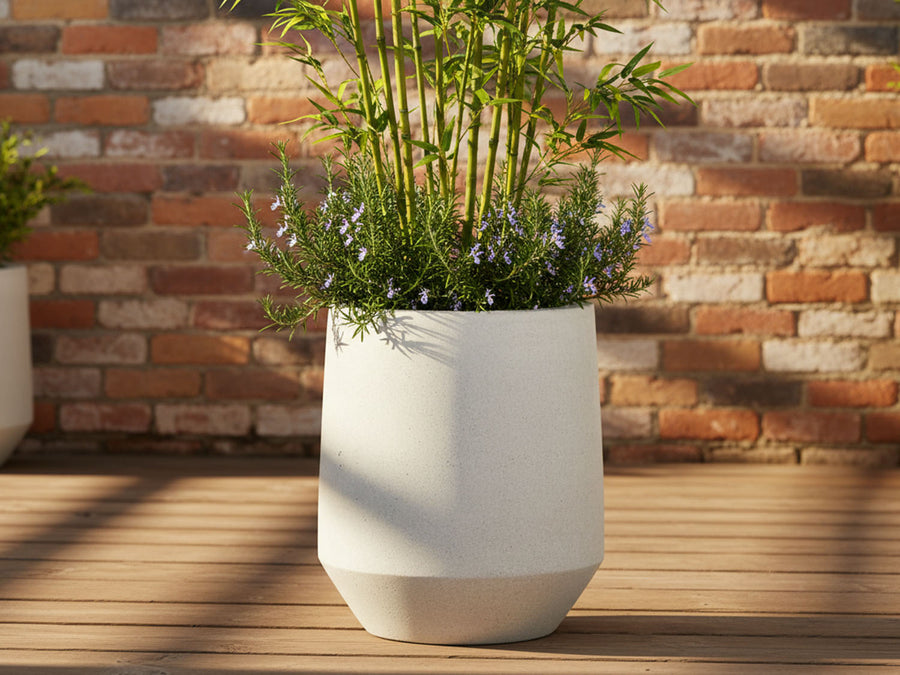
The Tall Milano Cone Planters in Coral arrive as four stepped sizes in one glaze, which gives you a graduated arrangement without hunting for matching pieces. For a softer silhouette, the Redondo Planter Mid Set of 4 rounds the profile. The Ivory Hex Planter brings a faceted geometry that reads well against modern architecture.
For tall planters for entryways, a matched pair flanking the door remains the most reliable arrangement in residential design. We covered the porch application in detail in our guide to styling a front porch with tall planters.
Wide Planters: When Do They Work Best?
Wide forms spread across the ground plane. They give you a broad soil surface, which is what multi-plant arrangements need, and they sit low enough that nothing behind them disappears.
Shallow fibrous roots belong here. Succulents, sedums, most herbs, seasonal annual mixes, and anything that runs sideways instead of down. A deep column of wet soil under a shallow root system stays soggy at the bottom, which is how root rot starts.
Wide planters also win on stability. A low, broad base does not need staking, does not tip, and handles exposed positions where a tall container would need weighting. Open decks, the flat landing at the top of steps, and long runs against a fence all suit them.
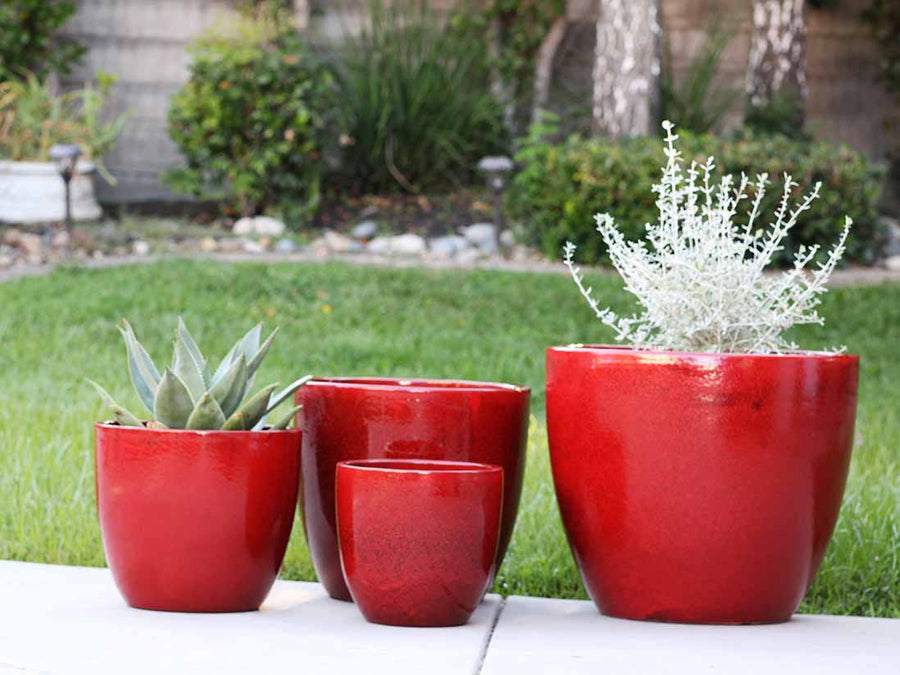
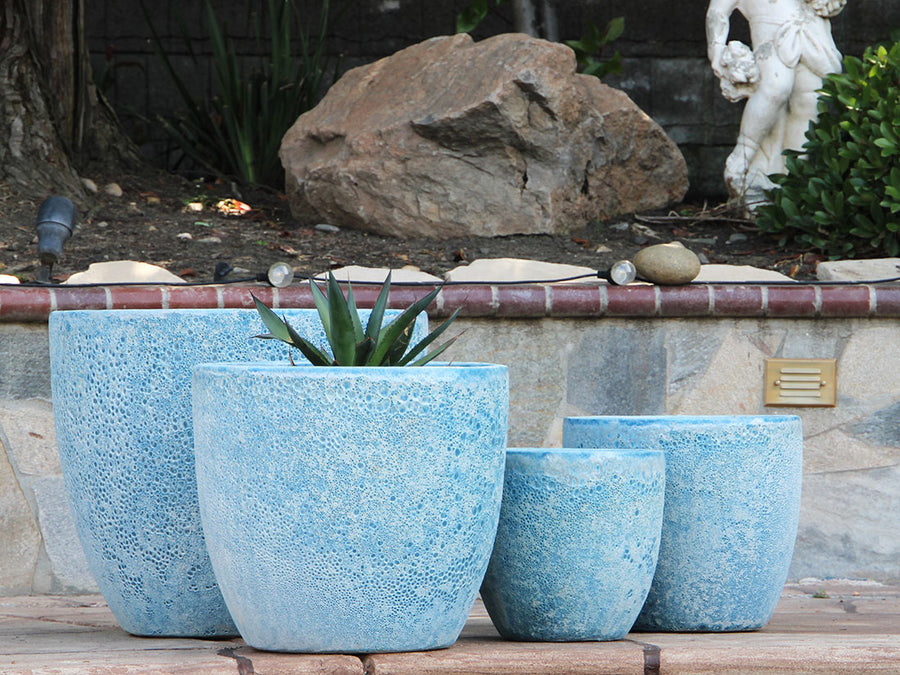
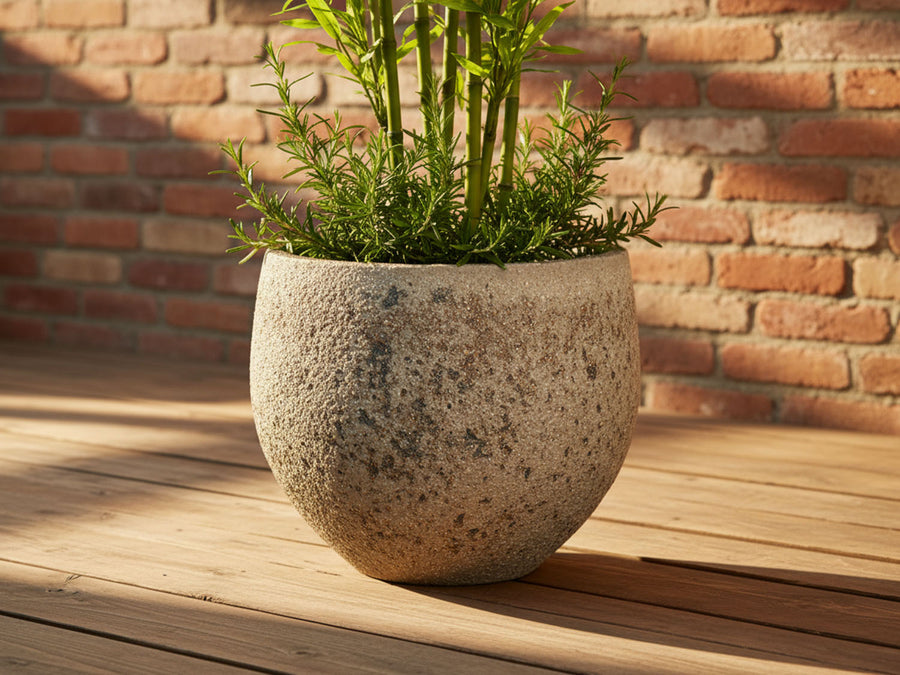
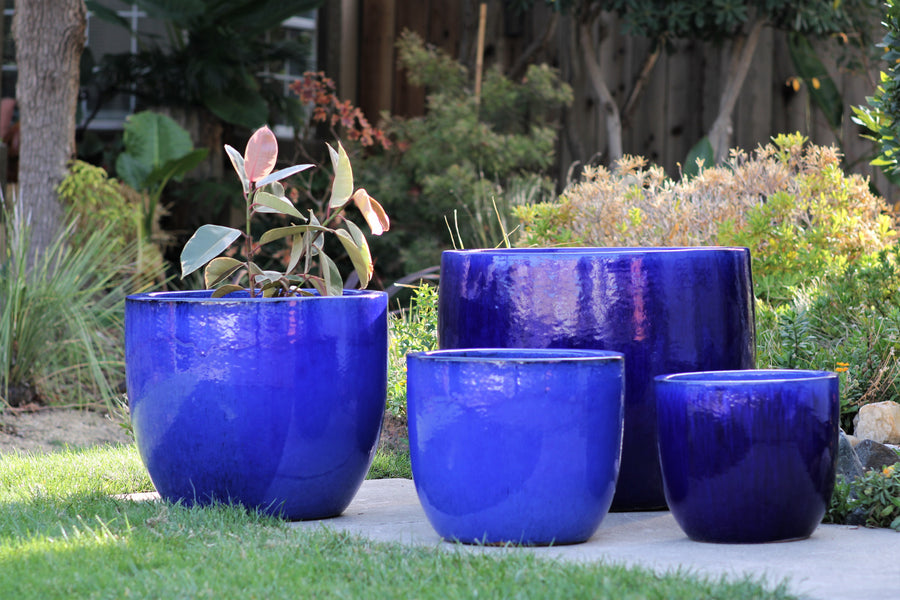
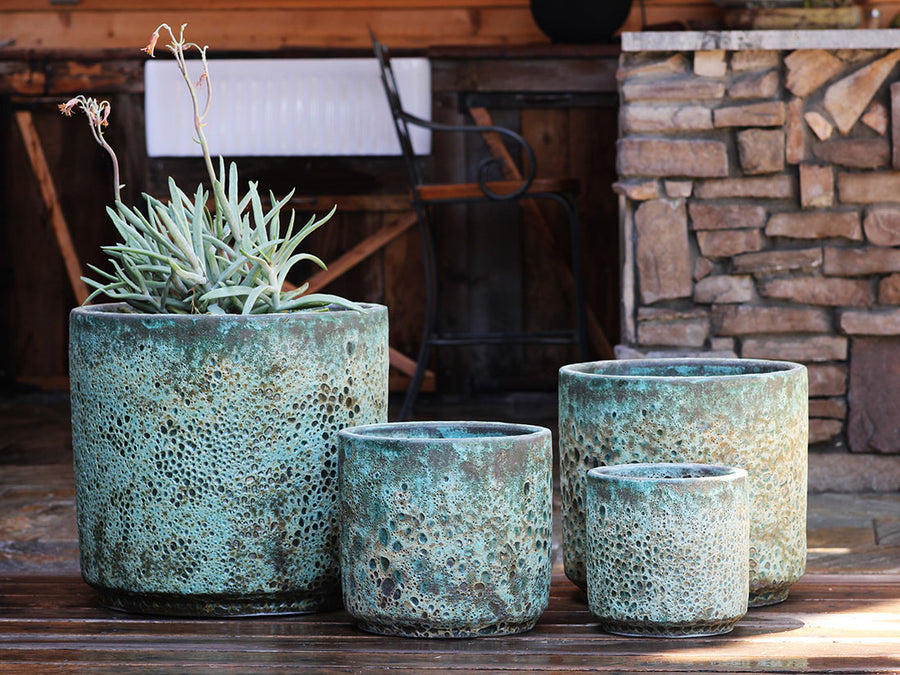
The Coco Pots and the Coco Pots Coral Set of 4 handle grouped low plantings well, especially clustered in odd numbers. The Rustic Sphere Planter comes in Grey Stone and Ivory Natural Stone with a textured surface that suits gravel and stone settings. The Egg Shell Pots give you a rounded, organic profile for softer garden compositions.
One practical note on strongly tapered wide outdoor planters. If you plan to drop a nursery pot straight in as a liner, check the taper first. A steep taper can leave the liner sitting higher than you expected.
Tall vs. Wide Planters: Key Differences
| Tall Planters | Wide Planters | |
|---|---|---|
| Root type suited | Taproots, woody roots, upright growth | Shallow fibrous roots, spreading habits |
| Drying rate | Slower, less frequent watering | Faster, can need daily water in summer sun |
| Stability in wind | Needs base width or weight | Low and broad, stable on its own |
| Winter root protection | Deeper soil buffers roots better | Shallow soil freezes through faster |
| Best placement | Corners, entryways, tight patios | Decks, steps, seating areas, long walls |
A wide container exposes far more soil surface to sun and wind, so it dries from the top down and fast. In an Arizona or Texas summer that can mean daily watering. A deep container holds moisture longer and needs less frequent attention, though the bottom third can stay wet after heavy rain.
Height plus wind exposure means you need base width or serious weight. Wide forms rarely have this problem. If you are placing a tall container somewhere exposed, weight matters as much as looks.
Shallow soil freezes solid faster and more completely than deep soil, so a wide container gives roots less thermal buffer in zones 5 through 7. The container itself is a separate question, which we cover in why outdoor planters crack in winter.
 Deep Bowl Planter
This one gets missed constantly. A container can have a wide footprint and still be deep, which changes everything about what it will hold. The Deep Bowl Planter is a clean example. Its footprint is broad, yet the interior runs nearly as deep as the pot is across, so it takes plants a standard bowl could never support. When you are judging best outdoor planter shape, measure the interior depth. The silhouette will mislead you.
That distinction matters most with large outdoor planters, where the difference between a shallow bowl and a deep one can be a foot of root room.
Which Planter Is Right for Your Space?
Work through it in this order.
What are you planting?
A small tree or upright shrub needs a tall form. Succulents and mixed annuals need a wide one. Settle this before anything else, because it is the only question with a wrong answer.
How much floor space can you give up?
Under roughly 200 square feet of usable patio, go tall. Wide containers eat circulation space you will miss every time you move a chair.
How far away will you see it?
Tall forms carry across distance because they break the horizon line. Wide forms read best from close range or from above, which is why they suit decks and seating areas.
How often will you realistically water?
Traveling in August or watering by hand? Choose depth. Wide and shallow containers in full sun are a daily commitment.
Most yards want both. A pair of tall containers anchoring the entry, wide bowls clustered near the seating. Our roundup of the best outdoor planters for late summer walks through how to choose outdoor planters by form across a whole property, and it is the approach we recommend when someone asks which of the best outdoor planters to start with.
What Plants Work Best in Tall and Wide Planters?
For tall containers, choose upright structure and deep roots. Dwarf Alberta spruce holds a conical shape year round and takes clipping. Boxwood standards give you a formal ball on a bare stem. Japanese maple 'Bloodgood' works in a large tall pot given afternoon shade in hot zones. Panicum virgatum 'Northwind' stands stiff through frost. Phormium brings sword-shaped foliage that suits the vertical line. Clumping bamboo works, though it needs the depth a tall form provides.
For wide containers, choose spreading and shallow. Sempervivum and Echeveria both want sharp drainage and almost no soil depth. Sedum 'Angelina' spills chartreuse over a rim. Creeping thyme makes a low collar around a taller centerpiece. Heuchera 'Caramel' holds warm foliage from spring through hard frost. Carex 'Everillo' arches out in a fountain shape.
Wide forms also suit the classic thriller, filler, spiller arrangement, since you need horizontal room for three plant roles in one container. Our guide to plants for large outdoor planters covers plants for tall planters and plants for wide planters through a full summer season.
Start With the Roots
Decide what is going in the container. Then decide where the container goes. Then pick the shape that serves both.
Working in that order is what separates a planting that thrives from one that looks right for six weeks and then struggles.
Frequently Asked Questions (FAQs)
Are tall or wide planters better?
Are tall or wide planters better?
Neither is better outright. Tall forms suit taprooted and upright plants, tight spaces, and long viewing distances. Wide forms suit shallow-rooted plants, multi-plant arrangements, and exposed windy positions where stability matters most.
What plants are best for tall planters?
What plants are best for tall planters?
Dwarf Alberta spruce, boxwood standards, Japanese maple, clumping bamboo, Phormium, and upright grasses like Panicum 'Northwind'. Anything with a taproot, a woody root system, or a strong vertical habit uses the depth well.
What plants are best for wide planters?
What plants are best for wide planters?
Sempervivum, Echeveria, Sedum 'Angelina', creeping thyme, Heuchera, and Carex all have shallow fibrous roots suited to broad shallow soil. Wide forms also hold full thriller, filler, spiller annual arrangements in a single container.
Do tall planters need more soil?
Do tall planters need more soil?
Usually yes, and that works in your favor. More soil volume means slower drying, better temperature buffering in summer heat, and more insulation for roots through winter. It also means a heavier container once filled and watered.