

American summers can be tough on your yard. Long stretches of high heat, intense sun, and fast-drying soil make it hard for container plants to survive. Growing a great-looking container garden takes a smart game plan. You need to pick tough, heat-tolerant plants and pair them with the right pots.
The amount of soil in a pot directly affects a plant's chances of surviving July and August heatwaves. Think of extra soil as a built-in shield that stops tender roots from frying when it gets scorching hot. Because of this, picking out a massive planter isn't just about looks, it’s a survival requirement.
Plus, when you go with pots made from breathable, earth-friendly materials, they naturally vent heat instead of trapping it the way plastic pots do. When looking for large outdoor planter ideas, smart shoppers should think about how a pot looks and how well it keeps roots healthy.
This guide covers the toughest summer plants for outdoor planters and pairs them with specific eco-friendly pots to upgrade your outdoor space.

Purple Fountain Grass (Pennisetum setaceum 'Rubrum')
Finding tall plants that can handle full summer sun isn't easy. It stands out with dark burgundy foliage and fluffy spikes that handle the heat in zones 9 to 11 perfectly. Broad-leafed varieties tend to dry out fast, but this grass has skinny blades that lock in water when the sun is blazing. Its deep, fibrous roots need a tall pot to keep the plant from tipping over during strong summer storms.
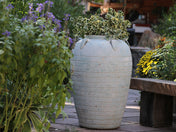
Its tall shape looks great in the Milano Tall Barrel Planter. With all that extra vertical space, deep-reaching roots can spread out safely, which anchors the heavy grass and keeps moisture right where the plant needs it.

Cape Leadwort (Plumbago auriculata)
Known for its rare sky-blue flowers, Cape Leadwort is a fast-growing, sprawling shrub. It loves extreme heat and blooms non-stop from late spring until the first frost. The plant actually oozes a chalky substance under its leaves to reflect sunlight and cool itself down naturally. It needs great drainage to prevent root rot, which makes porous, eco-friendly pots a smart choice.
For a classic European garden look, plant this trailing shrub in the Urn de France. The raised base lets the blue flowers spill beautifully over the edges, making it a great centerpiece for patios.

Elephant Ear (Colocasia esculenta)
If you want a lush, tropical vibe, Elephant Ears have huge, eye-catching leaves. Because their leaves are so big, they lose a lot of water and need soil that stays moist. Growing them in a pot means you need to use as much soil as possible to keep the roots from drying out during hot afternoons. The thick bulbs also need wide space to spread out as the summer goes on.
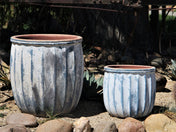
Because of their spreading roots, these tropical plants are a perfect fit for the wide opening of the Rounded Rim Parco Planter. The extra width lets the bulbs grow naturally, giving you a much thicker display of leaves by mid-summer.

Cono de Barro Set of 3
When planting near concrete driveways or stone patios, you need plants that can handle intense, reflected heat. Trailing Lantana is hard to beat when it comes to heat tolerance. This tough plant puts out clusters of bright purple, yellow, or white flowers that attract local pollinators like the tiger swallowtail butterfly. Its draping vines soften sharp corners and look best in a pot that tapers downward.
The cascading stems look great against sharp angles. Try using the Cono de Barro Set of 3 to frame a doorway. The tapered shape of these planters perfectly balances Lantana's wild, messy growth.

Dwarf Bougainvillea (Bougainvillea spectabilis)
The trick to getting bright blooms out of a Bougainvillea is a little bit of stress. These colorful plants do best when their roots are slightly crowded and the soil dries out between waterings. They handle drought incredibly well, making them perfect summer plants for outdoor planters in dry climates like the Southwest. A highly breathable container is a must to keep the soil from staying wet.
Unglazed edges help pull extra moisture away from the topsoil. The Jar With Unglazed Rim gives this tropical vine the exact breathable setup it needs. The earthy feel of the jar looks great next to the neon pink flowers.

Tropicanna Canna Lily (Canna x generalis)
Canna lilies bring tall, bold structure to any yard. With striped leaves of red, yellow, and green, they look great even before their bright flowers open. Cannas grow from thick roots that spread quickly in hot weather. They need thick, heavy-duty pots that won't crack under the pressure of the growing roots.
For a great centerpiece on a sunny patio, pair these thick roots with the Duet D Conques. The strong build of these large planters safely holds the fast-growing roots while adding a classy shape to your yard.
Final Thoughts
Getting your yard through a brutal summer just takes a little strategy. If you stick to incredibly tough, sun-loving varieties, you won't have to deal with a porch full of dead, crispy leaves. Just match those rugged plants with the right containers so they actually have a chance to grow. A massive, breathable pot gives the root system the insulation and breathing room it desperately needs. When putting your summer setup together, just remember: a happy plant and a smart pot are what make an outdoor space work.
Frequently Asked Questions (FAQs)
Do large containers keep plant roots cooler in summer?
Do large containers keep plant roots cooler in summer?
Yes. More soil means better insulation. A large block of damp soil absorbs and releases heat much slower than a small amount of dirt. This buffer protects tiny feeder roots from cooking. Using a thick, eco-friendly planter adds another layer of insulation against direct sunlight.
How deep should the soil be in a summer planter?
How deep should the soil be in a summer planter?
To keep things steady and hold enough water, aim for at least 18 to 24 inches of dirt in large ceramic or composite pots. You want deep soil so the roots can dive down away from the scorching surface air. When you're shopping, always check the interior depth instead of just guessing by the outside size.
Should I put rocks at the bottom of a large planter?
Should I put rocks at the bottom of a large planter?
No. Adding rocks or gravel to the bottom actually creates a perched water table. Water doesn't easily move from fine potting soil into coarse gravel. Instead, water gets stuck right above the rock layer, soaking the roots and opening the door for rot or fungus. Skip the gravel entirely and just fill the whole pot with a good, well-draining potting mix.
How often do summer planters need water when it's scorching?
How often do summer planters need water when it's scorching?
It really comes down to the specific plant and the type of pot you're using. During peak summer heat, most container plants need water every one to two days. However, eco-friendly pots can help slow down evaporation. Always check the soil about two inches down before watering. Watering deeply in the early morning gives plants plenty of moisture to handle the hot afternoon.
Why are eco-friendly materials better for planters?
Why are eco-friendly materials better for planters?
For starters, they won't off-gas nasty chemicals like some cheap synthetic plastics do. Because they're naturally porous, they let the roots breathe and vent excess moisture, basically copying the natural ground environment these plants love.