

Most seasonal container advice stops at "pick a pretty pot." That skips the two things that actually decide whether an arrangement looks styled or thrown together, and whether it survives July: the physics of the container itself, and a few proportion rules designers rarely spell out.
We cover both, then walk through specific pairings using handmade ceramic planters you can buy today. If you sort your home decor planters by color and shape alone, you are working with half the information.
Why the Pot Does More Than Hold Soil
Before we get to which flowers go where, one fact worth internalizing: the container is not a neutral vessel. It changes the temperature your roots experience, sometimes drastically.
Field studies out of Kansas State University measured soil on the sun-facing side of black nursery pots reaching 50°C (122°F), while flat and gloss white containers at the same site held around 36°C. The consequence was not cosmetic. Root biomass in the black pots dropped by 63 to 71 percent compared to the white ones.
Also, handmade high-fired ceramic behaves better here than thin plastic. The dense, thick walls act as thermal mass, slowing how fast outside heat reaches the core. That buffering is exactly why a light, natural-stone finish on a substantial ceramic body is a smarter default for full-sun spots than a slim dark pot, and it is a genuine reason to favor modern ceramic planters for home exteriors over lightweight alternatives when you are pairing sun-loving summer flowers.
The Proportion Rule Designers Actually Use
Here is the guideline that separates a considered arrangement from a lopsided one: the rule of thirds. A pleasing planting is roughly one-third visible container to two-thirds plant height, so the greenery reads as about twice the height of the pot you can see.
The same rule can be flipped the other way for tall statement pots: the container can instead be two-thirds of the combined height with the plants at one-third. Either version works. What fails is the accidental fifty-fifty split, where pot and plant look like they are competing rather than composed.
Keep this ratio in mind as you read the pairings below. It is the difference between decorative flower planters that look intentional and ones that look like an afterthought.
Soft Blooms: Light, Layered, and Low
Soft, low-growing blooms tend to spread rather than reach, making them ideal for wide, shallow planters that create a balanced, layered display.

Stonehaven Basin
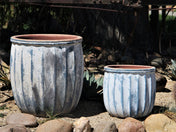
A shallow bowl shape is ideal here. The Stonehaven Basin has a wide opening and a low profile that gives spring annuals room to knit together into a single mounded display. Pack the surface with a ring of ranunculus or violas around a low center, and because the basin is broad rather than deep, the one-third-container rule stays satisfied even with modest 6-to-8-inch plants. It works as a patio-table centerpiece precisely because nothing towers over it.
Shop STONEHAVEN BASIN →
Stone Urn
For a spring entrance that needs a little formality, the Stone Urn with its raised pedestal reads as classical without being fussy. Its deep bowl handles trailing petunias or "silver falls" dichondra spilling over the curved rim, with a small spike plant or grass in the center for height. A matched pair flanking a doorway is a reliable planter sets for home decor move that photographs well and needs almost no maintenance beyond deadheading.
Shop STONE URN →These are the kinds of forms worth reaching for when you search planters for spring: wide, grounded, and built to show off flowers that hug the soil.
Summer: Height, Heat Tolerance, and Structure
Summer is where the temperature science becomes practical. You want taller structural plants, and you want a container that keeps roots from cooking.

Tall Trunk Planter
For a balcony, the vertical summer flowers for balcony move is to go tall and narrow rather than sprawling. The Tall Trunk Planter stands 33.5 inches, so a single upright specimen like a potted olive, a slim ornamental grass, or a leggy mandevilla trained upward reads beautifully against a railing. At that pot height, the rule of thirds tips toward the two-thirds-container reading, which is why a relatively simple planting still looks finished.
Shop Tall Trunk →
Maximus Planter
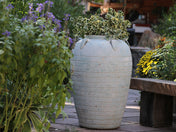
When you have real floor space and want a summer focal point, the Maximus Planter brings 27 inches of jar-shaped height. Its interior walls are smoother than its pitted exterior, which makes repotting seasonal swaps easier, and its size supports the classic layered look: clumping bamboo or purple fountain grass for height, with rosemary or creeping thyme underneath to soften the rim. Its light Ivory Natural Stone finish is the heat-smart choice noted earlier, keeping the root zone cooler than a dark pot would through peak afternoon sun.
Shop Maximus Planter →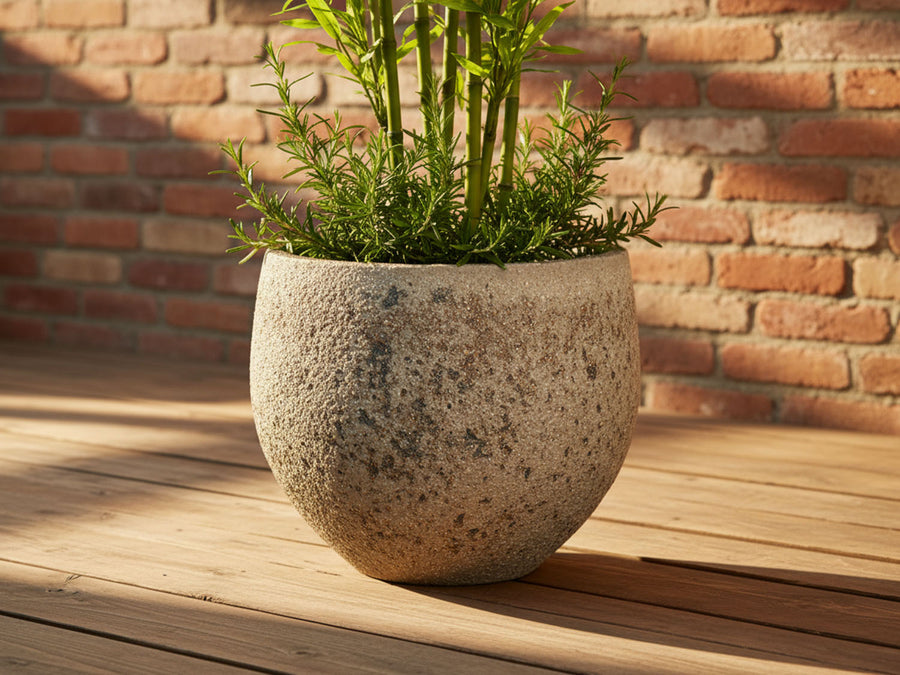
Rustic Sphere Planter
For a bold, rounded summer statement, the Rustic Sphere Planter suits a single showy mounding plant. Its tapered base means you should seat a nursery pot that matches the interior depth rather than one that perches too high, a detail worth measuring before you plant. This is a strong pick when you want planters for summer that feel sculptural on their own, flowers or not.
Shop Rustic Sphere →Anchoring a Space: Trees, Shrubs, and Perennials
Some arrangements are less about seasonal flowers and more about a permanent green anchor that seasonal color plays against.

Colossal Planter
The Colossal Planter has the depth to host a small citrus tree, a hydrangea, or a woody rosemary that stays put year-round. One principle to remember: a container this large holds a lot of soil, and an underplanted pot can hold water too long for a small root ball, so match the plant to the volume. Once a substantial shrub is established, you can tuck seasonal annuals around its base and rotate them spring to fall while the anchor stays constant. That mix of a permanent structural plant plus rotating decorative pots for plants color is how public gardens keep displays looking full all year.
Shop Colossal Planter →A Quick Word on Color Pairing
Since the planters above come in natural-stone neutrals, ivory, green limestone, black, and grey, you have a flattering backdrop for almost any bloom. A practical shortcut: warm flowers (coral, marigold, terracotta-orange) pop against the cool grey and green-limestone finishes, while cool flowers (lavender, blue, white) feel calm and crisp against ivory.
Neutral handmade ceramic planters rarely clash, which is part of why they age so gracefully across seasons as you swap the plants inside them. That longevity is the quiet argument for handmade planters for home decor over disposable seasonal pots: you are buying the frame once and changing the picture.
Whether you are assembling decorative planters for home interiors or building out a full patio, the method is the same: start with the pot's form and finish, apply the rule of thirds, then choose blooms that suit the season and the sun.
Frequently Asked Questions
Does the color of a ceramic planter really affect how well flowers grow in summer?
Yes, more than most people expect. Research measuring soil temperature found dark containers can run 8.9°C to 14.7°C hotter than light ones in direct sun, and in one trial black pots reduced root biomass by up to 71 percent versus white. For hot, sunny U.S. locations, a light or natural-stone finish on a dense ceramic body keeps the root zone cooler and helps blooms hold color longer.
Are handmade ceramic planters better than plastic for outdoor flowers?
For temperature stability, yes. High-fired ceramic has thick, dense walls that act as thermal mass, slowing how quickly outside heat reaches the roots, whereas thin plastic heats and cools rapidly. Ceramic also resists wind tipping because of its weight, which matters for tall summer plantings on exposed patios and balconies.
Which planter shape works best for spring flowers versus summer flowers?
Spring blooms are usually shorter and spread horizontally, so wide, low bowl shapes suit them and let flowers mound together. Summer often calls for height and structure, so tall jar or column forms let upright plants and grasses read properly against railings and walls. Matching form to the season's typical plant habit is what makes an arrangement look designed.
Can I reuse the same ceramic planter across all four seasons?
Yes, and it is the main practical advantage of investing in quality handmade planters. Because the neutral stone, ivory, and grey finishes pair with nearly any bloom color, you keep the container as a constant frame and simply rotate the plants inside, spring annuals, summer statement plants, fall foliage, and so on, rather than buying new pots each season.