

Most garden decor is static. A statue, a trellis, a planted border all look the same at 8 a.m. as they do at dusk. A fountain is the one piece that adds movement, sound, and reflected light to a yard, which is why designers treat water features as anchors rather than accessories. Among the materials available, ceramic water fountains have a particular advantage: they behave like decor first and equipment second, with glaze colors and hand thrown shapes that concrete and resin cannot match.
Why Ceramic Water Fountains Read as Timeless
Trend driven decor ages fast because its color sits on the surface. Resin fountains are painted, and paint chalks and fades under UV within a few seasons. On handcrafted fountains in high fired ceramic, the color is a glaze melted into glass at over 2000 degrees Fahrenheit, so the finish you buy is the finish you have in year fifteen.
Glaze also has depth that molded materials lack. Light passes into it and back out, which is why a glazed jar shifts appearance through the day while a painted one stays flat. That combination, permanent color plus changing light, is what lets ceramic water fountains sit comfortably in gardens across style eras instead of dating them. It is also why older decorative fountains in glazed clay still look current at estate sales.
Matching a Ceramic Water Fountain to Your Outdoor Style
The shape and glaze should agree with what surrounds them. Here is how that plays out across common American yard styles.
Modern and minimalist
Clean geometry reads as sculpture against stucco, gravel, and architectural grasses. The Drum Shape Fountain is a straight sided cylinder that holds its own as a single object in an open bed, and the Narrow Drum Shape Fountain brings the same profile to side yards and entry paths where a wide base crowds the walkway. In minimalist settings, resist the urge to plant around the fountain. Negative space is part of the look.
Japanese inspired and meditation gardens
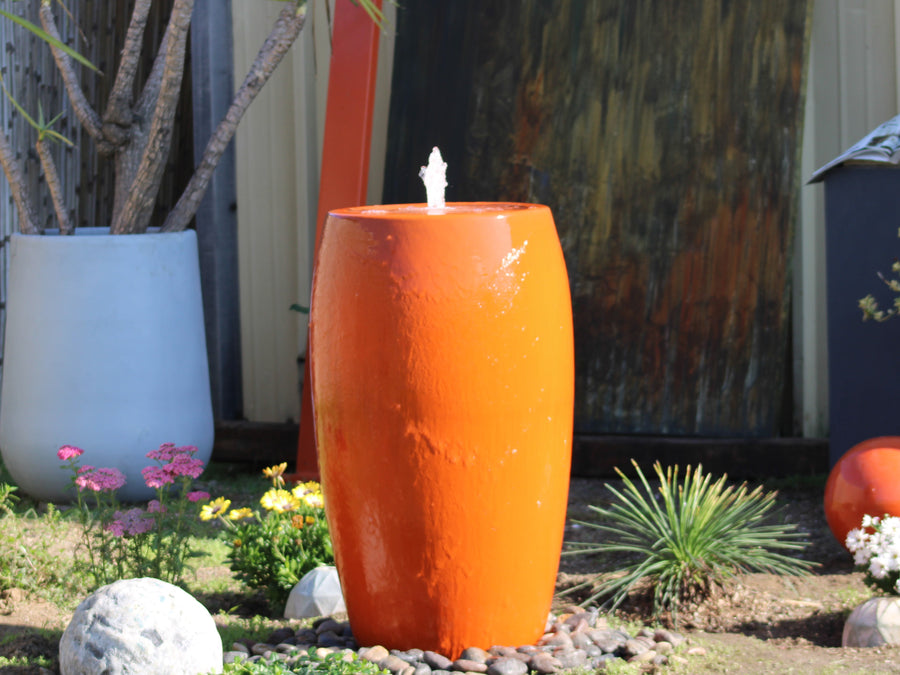
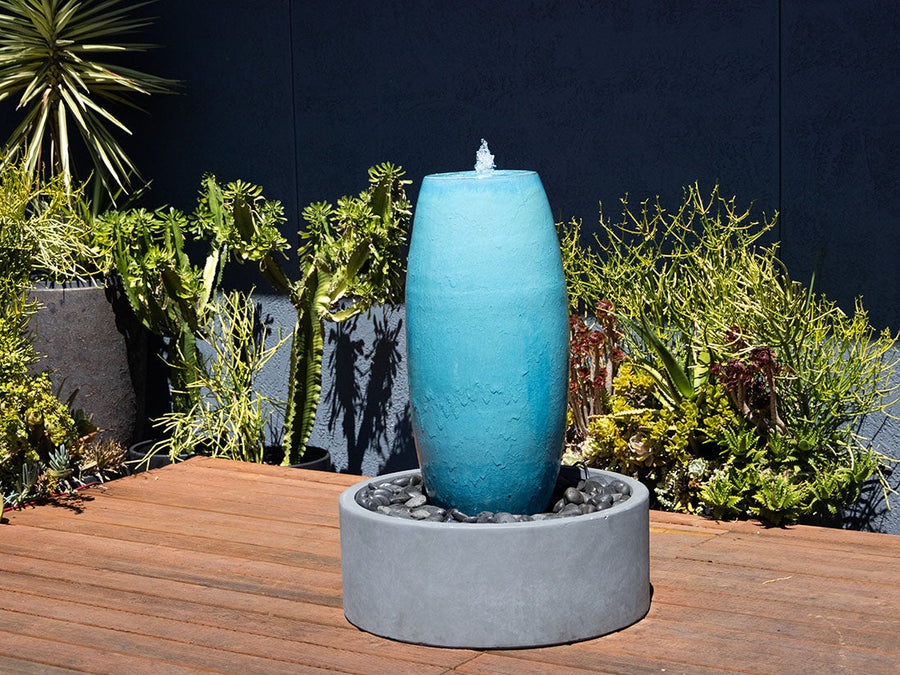
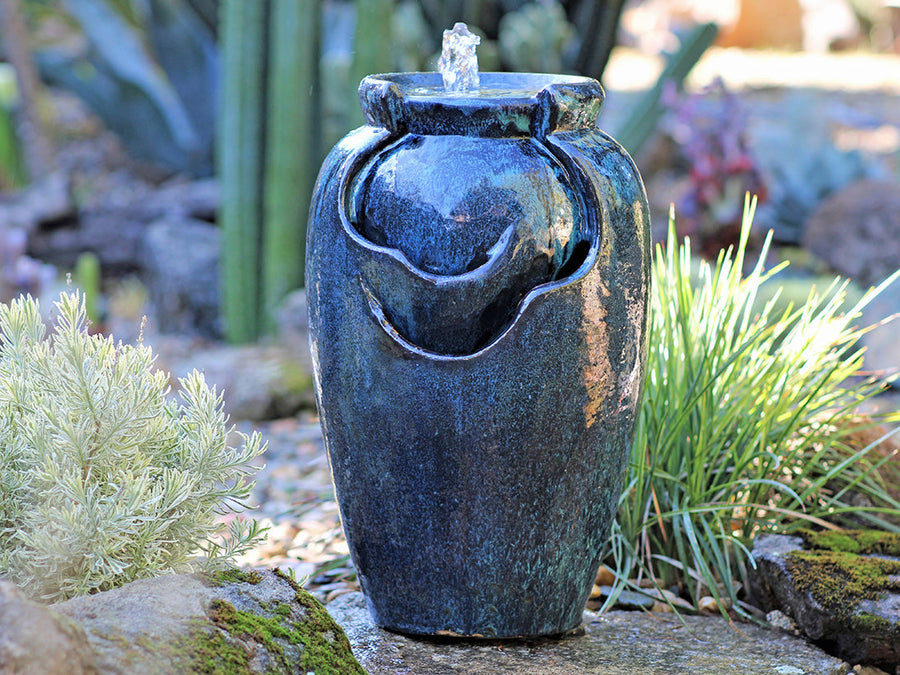
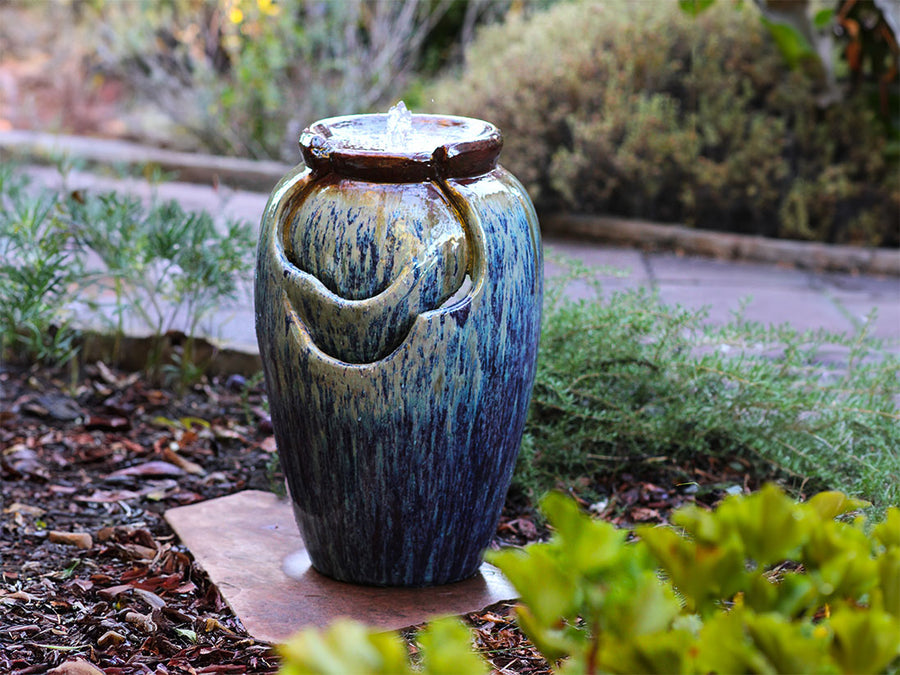
Ceramic water fountains in these settings should sound as good as they look. The Tea Garden Fountain in Deep Blue Sea is self contained, and its tone shifts with the water level in the chamber, so you can tune the sound to your space. If the surrounding planting runs warm, with Japanese maples or copper toned grasses, the same design in Red Copper on Violet picks up those tones instead of fighting them.
Cottage and traditional
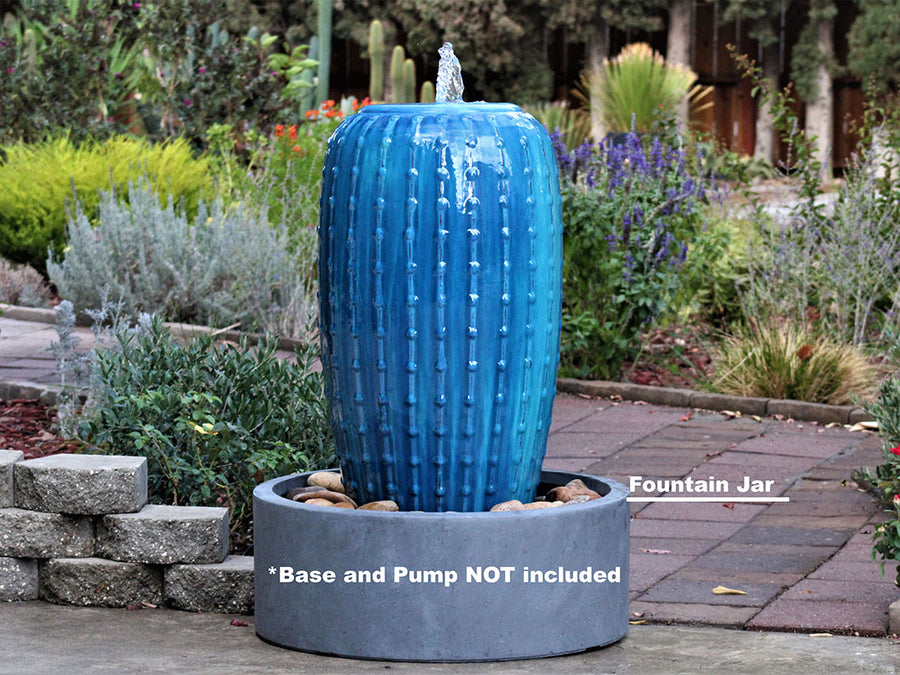
These gardens are dense with texture, so a smooth fountain can disappear into them. The Diamond Jar Fountain has a faceted surface that catches light at changing angles, enough visual activity to stay legible among roses and perennial borders.
Height driven plantings
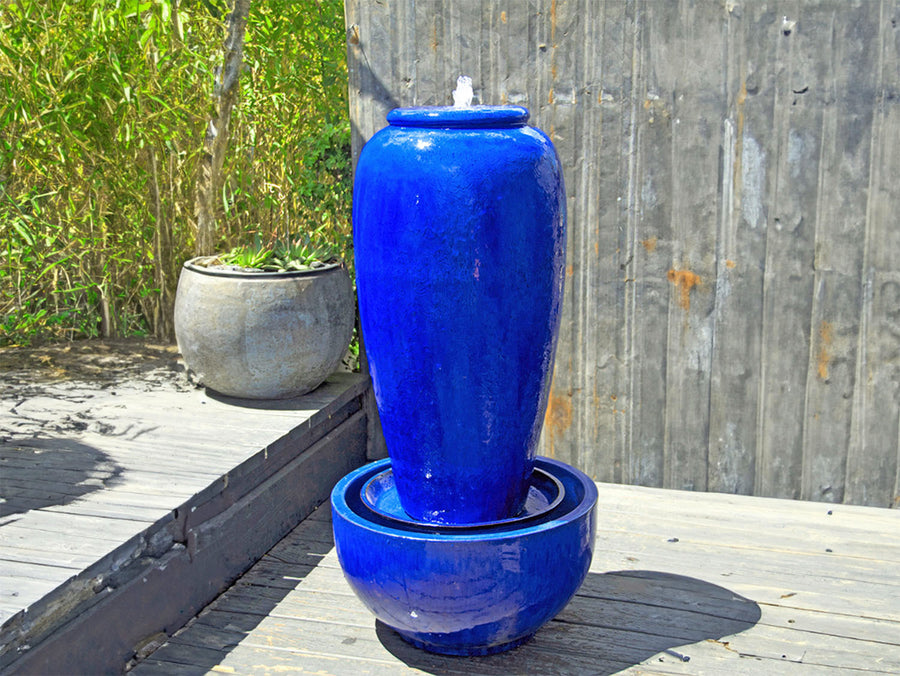
In a deep bed or against a fence line, short pieces vanish. The Tall Jar Fountain carries vertical presence that keeps a garden water feature visible above mid height planting.
Small patios and balconies
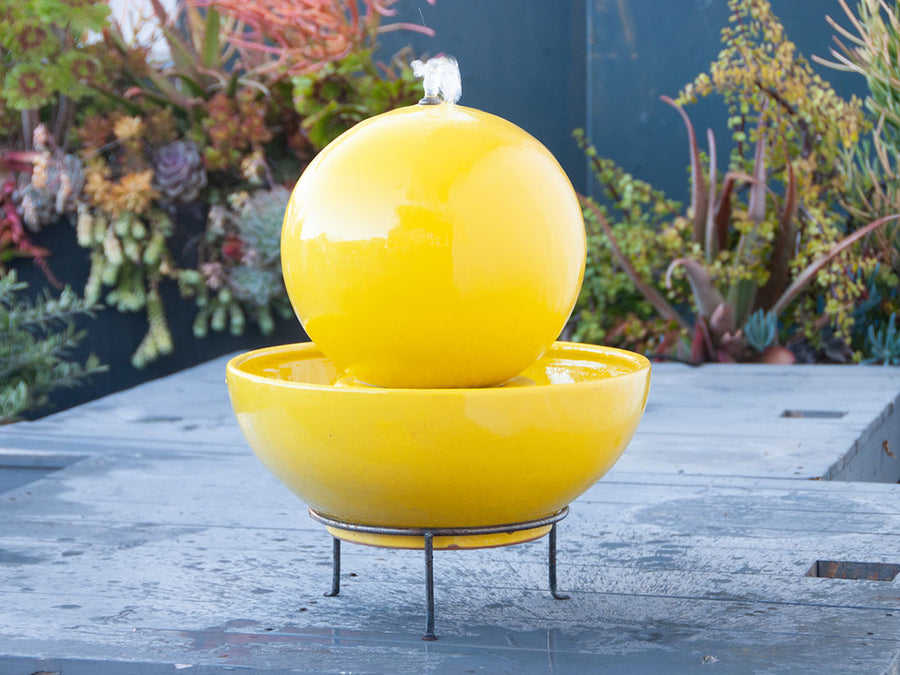
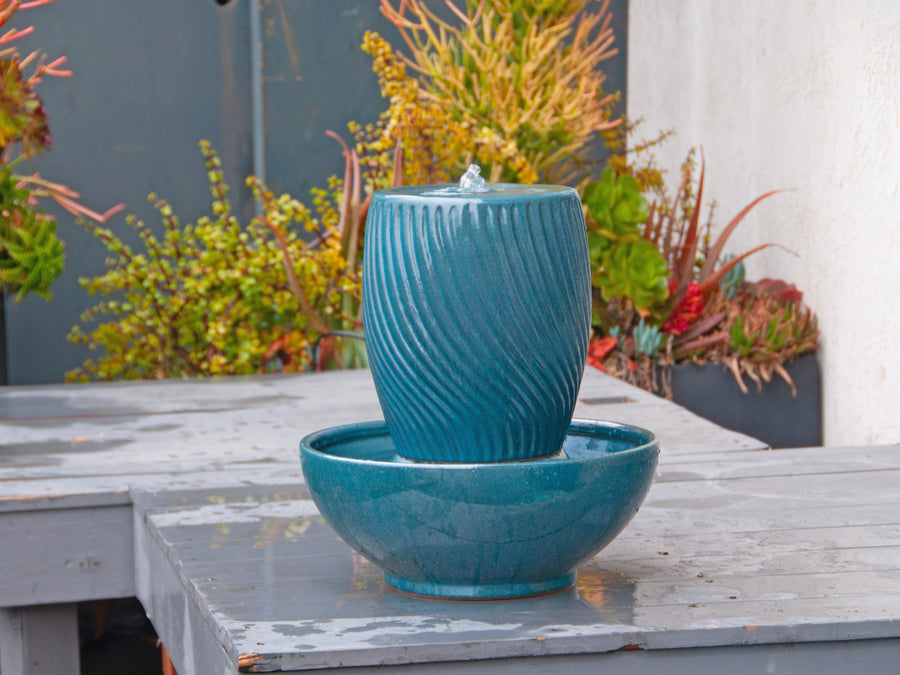
Outdoor garden decor at this scale has to earn its footprint. The Morning Sun Sphere Fountain and the Sunset Twist Jar Fountain work at tabletop scale and run on a standard outlet, which makes these small ceramic water fountains genuine patio fountains rather than scaled down compromises.
Placement Is Half the Decor Decision
Where ceramic water fountains sit matters as much as which one you buy. A few rules that professional landscapers use and homeowners rarely hear:
Put it where you actually sit
The sound of decorative garden fountains carries roughly 10 to 15 feet before yard noise swallows it. A fountain placed for the view from the street does nothing for your evening on the patio.
Check the sightline from indoors
In most of the US, you look at your yard through a window more months than you sit in it. Position ceramic water fountains where the kitchen or living room window frames them and the piece earns its keep in January.
Odd groupings
A single fountain flanked by two planters in a related glaze reads as composed. Pairs read as gateposts. If you group, keep the fountain tallest or clearly shortest, not matched.
Mind the trees
Placing outdoor water fountains under deciduous branches means leaf litter in the pump intake every fall. Partial shade is fine and slows algae, but avoid a direct leaf drop zone.
The Practical Part, Briefly
Jar style ceramic water fountains come in several setups: jar only, jar with a ceramic base, a buried disappearing reservoir, or an above ground framed reservoir for decks where digging is not an option. Any outdoor outlet feeding a water feature should be GFCI protected, which is standard US code and present in most homes built after the 1970s. Larger handcrafted fountains weigh 50 to 120 plus pounds and arrive by freight, so plan the spot before delivery.
Care is simple: top off water weekly so the pump never runs dry, wipe hard water scale with a vinegar dampened cloth, and drain completely before the first hard freeze, because ice expands about nine percent and will crack any vessel it fills. Do that and a ceramic water fountain outlasts most of the plants around it.