

For a sophisticated homeowner, a garden is more than a patch of green. It is an extension of the home’s architecture. Whether you are flanking a colonial entryway or accenting a mid-century modern patio, high-quality planters serve as the anchors of your outdoor aesthetic.
However, the diverse American climate, ranging from the humid subtropical heat of the South to the punishing freeze-thaw cycles of the Midwest, demands a sophisticated approach to outdoor planters care. Protecting your handmade ceramic outdoor planters and large-scale vessels requires moving beyond basic gardening and exploring structural maintenance.
Here is how to ensure your outdoor planters remain as stunning in five years as they are on the day of delivery.
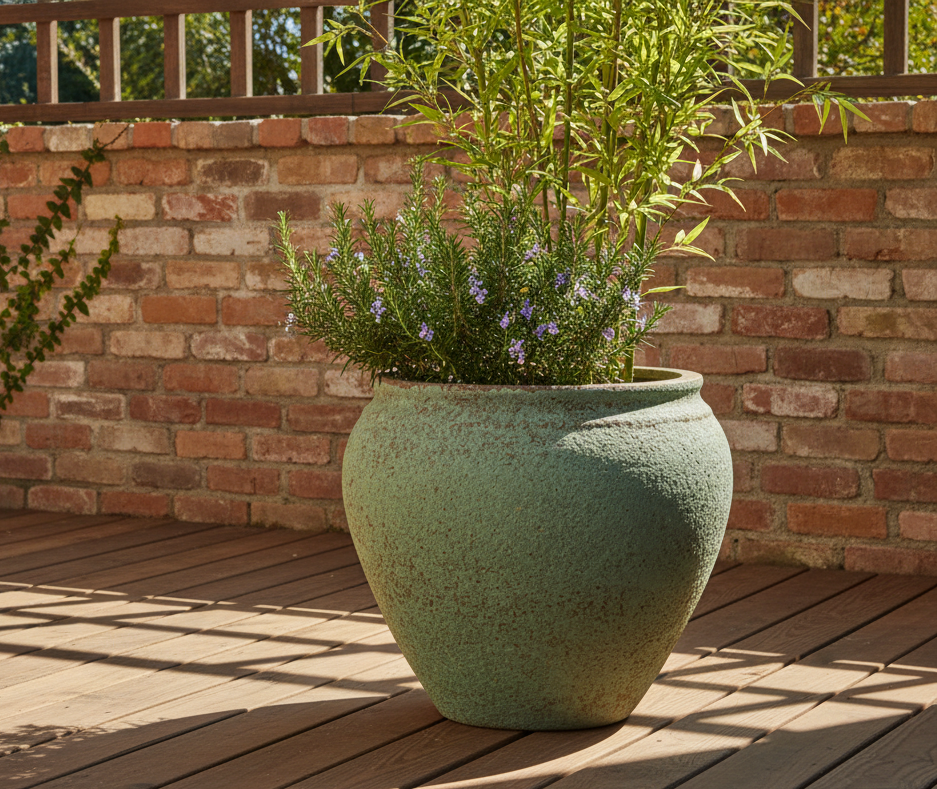
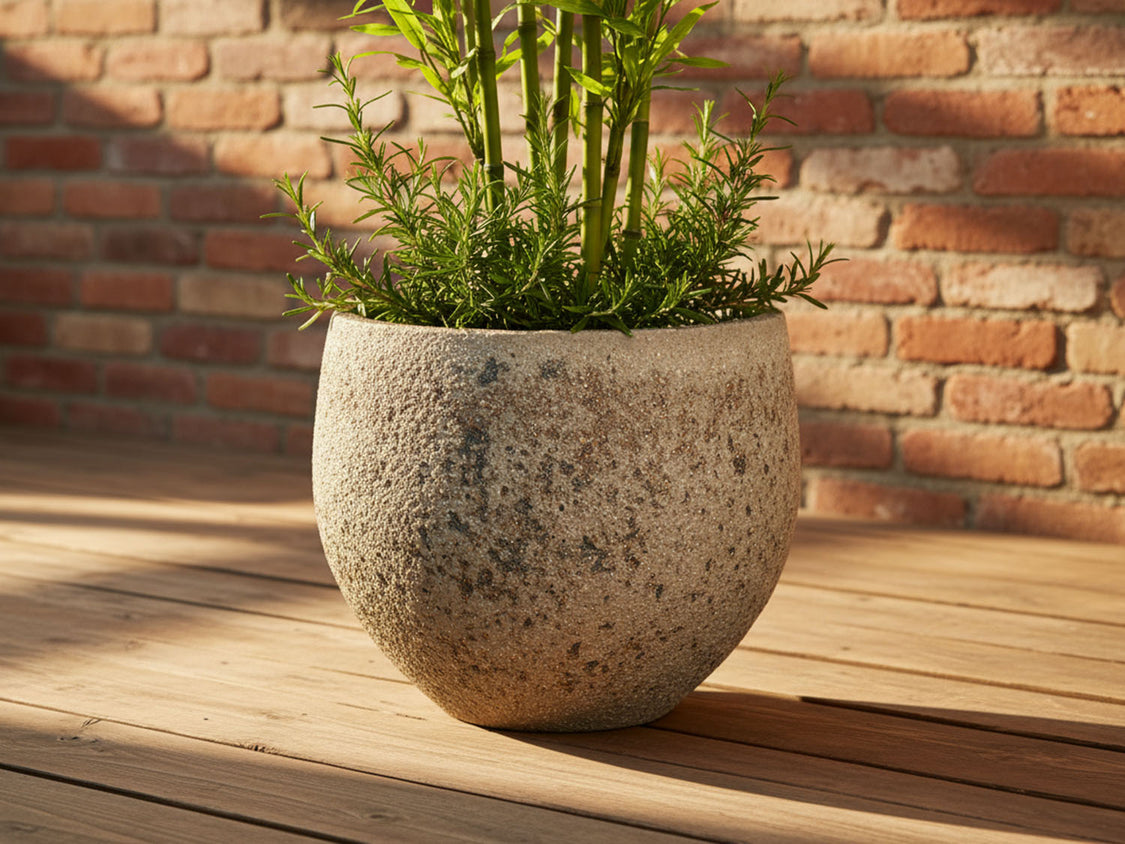
Taking Care of Planters When Spring Arrives
Spring is not just a planting season—it’s also the ideal time to inspect and refresh your outdoor planters after winter. Cold weather can leave behind salt residue and cause mineral buildup that affects both appearance and durability.
The Deep Clean Routine
Winter often leaves behind a residue of salt (especially in coastal or snow-heavy regions) and "efflorescence" - that white, powdery mineral deposit that can mar the finish of a durable outdoor planter.
- The Pro-Tip: Avoid power washing, which can micro-fracture glazes. Instead, use a soft-bristle brush and a mixture of white vinegar and water (1:5 ratio) to dissolve mineral buildup without compromising the integrity of the material.
Drainage Verification
Before adding new soil, ensure the drainage holes aren’t compacted with old root mass. A clogged planter is the leading cause of root rot in summer and ice-wedging in winter. If you are using a statement piece like the Stonehaven Planter, its architectural lines deserve the best start. Ensure the interior base is clear of debris to allow for maximum airflow.
Taking Care of Planters When Summer Arrives
In states like Arizona, Texas, and Florida, the primary enemy is not just heat, but UV degradation and root baking. Root baking refers to a situation where dense, tangled roots fill a container, leaving little soil to hold water or nutrients, causing the plant to struggle
The Science of Watering Frequency
In high-heat months, the soil in a planter can reach temperatures 20 degrees higher than the ground. This creates a "kiln effect" that can stress the roots.
- What To Do: Shift your watering schedule to the pre-dawn hours. Watering at night in humid climates can encourage fungal growth, whereas morning watering allows the plant to hydrate before the peak evapotranspiration (combination of evaporation and transpiration) period begins.
Repositioning for Sunlight
The sun’s path in July is significantly higher and more intense than in April. One way to protect your planters and plants is to keep them rotating at regular intervals. Rotating your planter 90 degrees every two weeks ensures even UV exposure on the ceramic glaze and prevents disproportionate plant growth.
Taking Care of Planters In Autumn & Winter
As daylight wanes, stop high-nitrogen fertilization to discourage frost-sensitive growth and top-dress soil with organic compost for root insulation. For textured vessels like the Bark Texture Planter, use compressed air to clear organic debris from crevices, preventing moisture traps during the transition to colder months.
The main threat in winter is the freeze-thaw cycle, which can cause water-saturated soil to expand and crack vessels. To protect ceramic pieces, always elevate them with pot feet or cedar shims to ensure drainage and prevent ice-wedging at the base. Choosing spherical shapes like the Rustic Sphere Planter or adding internal insulation can further help distribute pressure during extreme Arctic blasts.
Selecting the Best Planters for Changing Seasons
Not all containers can handle a true four-season climate. Most mass-market pots fail because they lack the density to withstand the pressure changes caused by sudden temperature spikes. If you are looking for the best planters for changing seasons, certain Plantatorem designs are built specifically to last year-round.
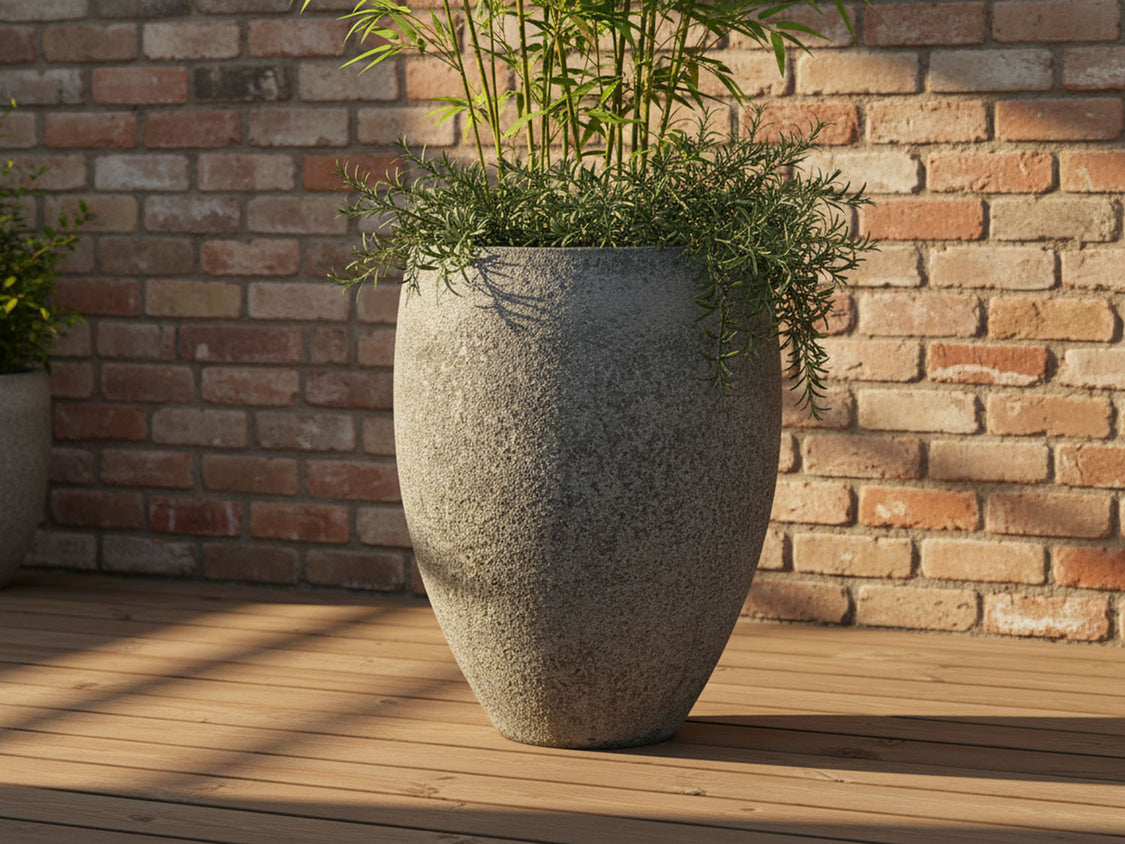
- Stonehaven Planter: This piece features thick walls and clean architectural lines that help insulate roots during extreme temperature swings. It’s heavy and stable, making it a reliable, crack-resistant anchor for your patio through both heatwaves and frost.
- Colossal Planter: Built for big spaces, this planter uses high-density materials that hold up against expanding soil. Its big size creates a natural thermal buffer, helping keep soil temperatures steady even during peak summer heat.
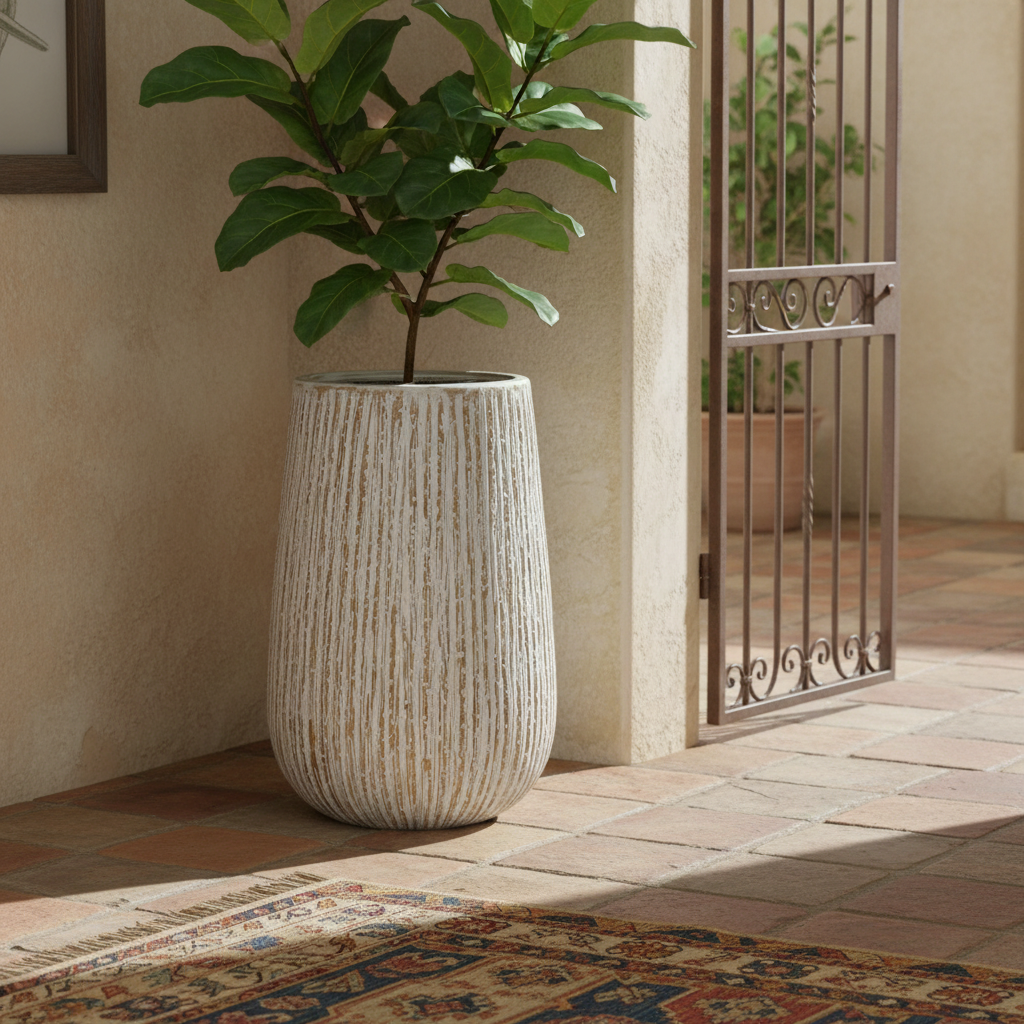
- Bark Texture Planter: This high-fired vessel pairs detailed design with durability. The UV-resistant finish won't easily fade or chip. Its organic, textured exterior looks great all year long.
- Rustic Sphere Planter: Round shapes naturally distribute pressure better than rigid, square corners. This curved design easily handles the stress of freezing and expanding soil, making it a smart, lasting option for colder USDA zones.
When shopping for the best planters for changing seasons, look for "high-fired" ceramics or heavy-duty composites. Because they have lower porosity, they absorb less water—which means they are far less likely to crack when a sudden North American "Arctic Blast" hits. Ultimately, effective outdoor planters care starts with choosing materials that work with the weather, not against it.
Looking to upgrade your landscape? Explore our collection of distinctive large outdoor planters designed to withstand the rigors of the American climate while maintaining unparalleled elegance.
FAQs
Can I leave my ceramic planters outside during a snowstorm?
Can I leave my ceramic planters outside during a snowstorm?
Yes, provided they are high-fired and elevated. The key to outdoor planters care in snow is ensuring the drainage hole does not freeze shut. If the pot is sitting in standing water that freezes, the base will likely crack. Always use pot feet to maintain airflow.
How do I stop my outdoor planters from fading in the sun?
How do I stop my outdoor planters from fading in the sun?
UV rays can dull the pigment of lower-quality glazes. To maintain the luster of durable outdoor planters, look for vitrified glazes. Additionally, applying a seasonal coat of specialized UV-protectant clear sealer (designed for masonry or ceramics) can act as a sunscreen for your garden accents.
Why is my planter cracking even though it's frost-proof?
Why is my planter cracking even though it's frost-proof?
"Frost-proof" generally means the pot's material can handle the cold, but it doesn't account for wet soil. If waterlogged dirt freezes solid inside your container, the ice expands and can break apart even the toughest handmade ceramic outdoor planters. To avoid this, mix some perlite into your soil in late fall to improve drainage and give the freezing moisture room to expand.
How often should I change the soil in large outdoor planters?
How often should I change the soil in large outdoor planters?
For massive vessels, you usually only need to completely empty and refill the dirt every 3 to 5 years. That said, it's a great idea to give them a quick refresh each spring. Just scoop out the top six inches of old dirt and replace it with a fresh, high-quality potting mix to give your plants a seasonal boost.
What is the best way to clean white salt stains on my planters?
What is the best way to clean white salt stains on my planters?
Those chalky white marks are called efflorescence. They happen when minerals from the soil or clay get pulled to the surface by water. You can usually scrub them away with a stiff plastic brush and a simple mix of one part white vinegar to five parts water. If the stains still won’t go, apply a quick paste of baking soda and water, let it sit for about 15 minutes, and wipe it away safely without ruining the planter’s finish.