

Bringing moving water into a residential space completely changes the feel of the area. The continuous sound of flowing water naturally drowns out street noise and creates a stunning focal point. Homeowners looking to add water elements usually face a big decision regarding scale and placement. They have to choose between installing large outdoor fountains or going with more compact tabletop designs.
Both options bring distinct architectural and auditory benefits. They also require entirely different levels of structural planning, maintenance, and spatial commitment. You might want a large garden water fountain to anchor your backyard. Or maybe you need small tabletop water fountains to upgrade your indoor acoustics. Either way, understanding the mechanical and design differences will help you make the right choice.


What Are Garden Fountains?
Garden fountains are heavy architectural pieces built to handle different weather conditions while moving large volumes of water. These installations usually act as the main visual anchor in a landscape design. Decorative garden water fountains use a submerged pump system that recirculates water from a hidden basin up through the center of the piece.
Setting up an outdoor water fountain for garden placement means you need a dedicated 110-volt GFCI electrical outlet to safely run the pump. The site also needs a perfectly level foundation. A poured concrete pad or several inches of compacted gravel usually does the trick. This prevents the heavy structure from sinking unevenly over the years.
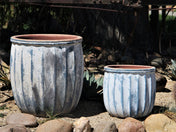
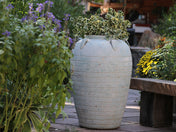
If you want a massive visual impact, the Cambria Sphere Fountain Egg York brings a bold geometric profile to modern landscapes. For more classic or transitional yards, the heavy proportions of the Drum Shape Fountain or the highly textured Thailand Jar Fountain offer great water flow and plenty of visual weight.


What Are Tabletop Fountains?
Tabletop fountains run on the exact same mechanics as the outdoor versions, just scaled down for tight spaces. These home decor fountains hold less water and run on low-voltage pumps built for quiet operation.
The biggest draw of a tabletop fountain is the sound. While a massive outdoor feature creates a wide spectrum of noise, tabletop models put out a softer frequency called pink noise. Science shows this specific frequency actually helps mask annoying background sounds like passing cars or people talking in the next room. These units also bump up the ambient humidity right around the fountain. That extra moisture helps out during dry North American winters when indoor heating systems suck all the humidity out of the air.
For great sound and a cool look, the Twisted Fountain Gold Turquoise throws a bright pop of color into neutral rooms. If earthy, organic shapes fit your style better, the Morning Sun Sphere Fountain and the Sunset Twist Jar Fountain work perfectly as functional art pieces on an office desk or entryway console.
Key Differences Between Garden and Tabletop Fountains
The daily operation of garden water fountains looks very different from tabletop models, and it goes way beyond just their physical size.
Evaporation Rates and Splash Out
Outdoor water fountains lose water fast in the summer heat and direct sunlight. Wind and aggressive water flow also cause an effect called splash out. A big fountain could easily lose an inch of water every day in a hot climate. That means you have to manually refill it all the time or hook up an auto-fill valve directly to your irrigation system. Tabletop models barely evaporate at all. You usually just need to top them off once a week.
Power Supply and Usage
Garden water features require outdoor-rated, weather-resistant GFCI outlets to avoid electrical hazards. Even with their massive size, modern outdoor fountain pumps run with surprising energy efficiency. They rarely draw more continuous power than a regular household microwave. Tabletop models just plug right into standard indoor wall outlets and use barely any electricity.
Microclimate Creation
Big outdoor setups physically change the environment around them. The cascading and evaporating water creates a localized cooling effect. This can actually drop the temperature of a hot summer patio by a few degrees. Indoor units just offer a mild humidification boost without changing the temperature of the room.
Pros and Cons of Garden Fountains
Pros
- Acts as a massive structural anchor for landscape design.
- Brings in colorful local birds, hummingbirds, and helpful pollinators.
- Creates a cooling microclimate during brutal summer heatwaves.
- Puts out a deep gurgling sound that brings a sense of calm and quiets the mind at night.
Cons
- These are not set-it-and-forget-it installations. Routine maintenance is an absolute must to keep the pump clear of debris.
- Without regular cleaning, stagnant outdoor reservoirs easily turn into a nursery for local amphibians. A quiet pond can quickly become a loud chorus of frogs and toads.
- Large front yard water features sometimes turn into an attractive nuisance. They occasionally fall victim to pranks by neighborhood kids.
- Requires strict winterization in regions where the frost line drops below freezing.
Pros and Cons of Tabletop Fountains
Pros
- Zero installation required. Just unbox the unit, add water, and plug it right in.
- Highly portable. You can easily move it around when redesigning a room.
- Helps fight dry indoor air by acting as a localized humidifier.
- ets up a gentle acoustic barrier that works perfectly for home offices.
Cons
- The water reservoir is extremely small. The pump can easily burn out if the water level drops too low.
- Visual impact stays strictly localized to one single room or surface.
- Requires the exclusive use of distilled water to stop permanent mineral buildup.
Which Fountain Is Right for Your Space?
Picking between the two really comes down to the space you have available and the specific problem you want to solve.
If you prefer to avoid adding more household chores to your weekend, a tabletop fountain gives you the sights and sounds of moving water without the physical work.
If you treat landscaping as a labor of love that boosts your property value and builds a personal sanctuary, modern water fountain ideas usually point toward setting up a large unit near a patio seating area.
Placement Ideas for Both Fountain Types
Putting your unit in the right spot maximizes both its visual appeal and mechanical efficiency.
When looking at patio fountain ideas, try to keep your outdoor fountain away from deciduous trees like maples or oaks. Dropping leaves will clog up the pump intake screen fast and force the motor to overheat. Instead, set the fountain in a partially shaded transition zone right where the patio meets the lawn. This cuts down on water evaporation while keeping the feature highly visible from your indoor windows.
When setting up interior home decor fountains, think about the sound of the surface underneath it. Putting a tabletop fountain on a hollow wooden desk sometimes amplifies the low hum of the electric motor. Sliding a small neoprene mat or a folded cloth under the base absorbs those vibrations. Then you only hear the calming sound of the water.
Quick Comparison: Garden Fountains vs. Tabletop Fountains
| Feature | Garden Fountains | Tabletop Fountains |
|---|---|---|
| Location & Scale | Big outdoor architectural anchors | Compact functional art for indoor surfaces |
| Power Requirement | Outdoor-rated GFCI electrical outlet | Standard indoor wall outlet |
| Water Requirement | Tap water treated with fish-safe algaecides | Distilled water to stop hard mineral scale |
| Evaporation Rate | High due to direct sun, wind, and splash out | Low due to indoor climate control |
| Acoustic Profile | Broad spectrum sound that masks street traffic | Gentle pink noise that masks indoor chatter |
| Maintenance Focus | Skimming leaves and stopping algae or amphibians | Refilling weekly and quarterly pump cleaning |
| Winter Care | Strict draining and covering required before freezing | None required |
Conclusion
Bringing moving water into your space is ultimately about matching function with lifestyle. Large garden fountains deliver a bold, immersive experience that transforms outdoor areas into dynamic, cooling retreats, while tabletop fountains offer a simple, low-maintenance way to introduce calming sound and subtle humidity indoors. The right choice depends on how much space you have, how involved you want to be in upkeep, and the kind of atmosphere you’re aiming to create. Whether it’s a statement feature in your yard or a quiet accent on your desk, both options add a timeless sense of motion and tranquility to everyday living
FAQs
How many gallons per hour (GPH) should a garden fountain pump have?
How many gallons per hour (GPH) should a garden fountain pump have?
The general rule of thumb for garden water features is that your pump needs to push 100 gallons per hour for every inch of the fountain's width. This guarantees a consistent, heavy flow of water over the edges instead of a sad, weak trickle.
Why is my tabletop fountain pump making a loud rattling noise?
Why is my tabletop fountain pump making a loud rattling noise?
A rattling pump usually means the water level inside the reservoir dropped way too low. The pump starts sucking in air instead of water. Unplug the unit right away and pour in distilled water until the pump sits completely submerged. Check the intake valve for trapped debris if the noise keeps happening.
How do I winterize my outdoor water fountain?
How do I winterize my outdoor water fountain?
You have to drain all the water out of the basin before temperatures drop below freezing. Pull out the submersible pump, clean it off, and store it inside the house for the winter. Dry the fountain basin completely with a few towels. Finally, wrap the whole fountain in a breathable, waterproof fountain cover. This stops snowmelt from piling up and freezing inside the bowl.
Can I leave my outdoor fountain running constantly?
Can I leave my outdoor fountain running constantly?
Yes. Leaving the pump running 24 hours a day is actually much better for the mechanics. Turning the pump on and off all the time causes way more wear and tear on the internal parts. Running it continuously also stops the water from going stagnant. Moving water actively deters mosquito breeding and slows down algae growth.