

Translated literally as "baked earth" from Italian, terra cotta describes a ceramic tradition with a long history. Today, homeowners and landscape designers are rediscovering the function and look of natural clay. From California estates to Arizona desert yards or New York City rooftop terraces, adding these historical pots brings a real sense of authenticity to your outdoor spaces.
The Ancient Roots of Cretan Craftsmanship
To understand the value of modern Greek terracotta planters, look back thousands of years to the Minoan civilization on the island of Crete. Archaeologists digging at the ancient palace of Knossos found massive clay pots called pithoi. These giant jars were built to store olive oil, wine, and grain. The fact that these ancient artifacts survived, shows the durability of the local clay and the skills of early potters. Ancient farmers understood unglazed clay so well that they even buried porous clay pots in the soil to water roots deep underground. They knew that baked earth naturally interacts with its environment.
Today, potters in the Cretan village of Thrapsano continue a tradition of pottery making that goes back thousands of years. Instead of using factory molds, they use traditional methods to make popular artisan planters. Because the local clay packs plenty of iron oxide and chamotte, the final pieces take on a naturally warm, reddish hue. Potters stick to strict historical methods to make incredibly tough, handmade terracotta planters that hold up beautifully no matter what kind of weather they are exposed to.
The Benefits of Porous Clay
Many gardeners wonder why they should choose terracotta planters over cheaper, lightweight options. The answer is in the fired clay itself. Traditional natural clay pots are very porous. This structure acts like a breathable wall between the dirt and the outside air.
For everyday gardeners, this breathability acts as a backup plan against accidental overwatering. When you water plants in terracotta pots, the unglazed clay absorbs extra moisture and lets it evaporate through the walls. This prevents soggy soil, which is the main cause of root rot in sensitive plants. Succulents, citrus trees, and drought-tolerant herbs grow well in this airy environment.
Raw terra cotta pottery also acts as a filter. If soil gets too much mineral salt from heavy fertilizer or hard tap water, the porous clay pulls those salts away from the roots and pushes them to the outside of the pot. Modern landscaping often uses heavy concrete containers, but concrete can slowly leak harsh alkaline chemicals into your potting soil. High-fired clay stays chemically neutral, keeping the soil stable for sensitive plants. Keep in mind that sealing or painting the outside of a natural clay pot ruins these benefits by blocking the pores.
The thickness of these outdoor clay planters also provides insulation. During a hot Texas summer, thick clay walls keep delicate root systems from overheating in the sun. As evening temperatures drop, the clay holds onto heat and slowly warms the soil.


Choosing Authentic Designs for Your Yard
Using these pots in your outdoor decor lets you try out different Greek terracotta pottery setups. The weight and natural texture of Mediterranean planters ground a landscape, giving it a permanent feel that plastic containers just can't match. Whether your yard leans classic or modern, you'll find plenty of fitting shapes in the Plantatorem collection.
For a Big Impact
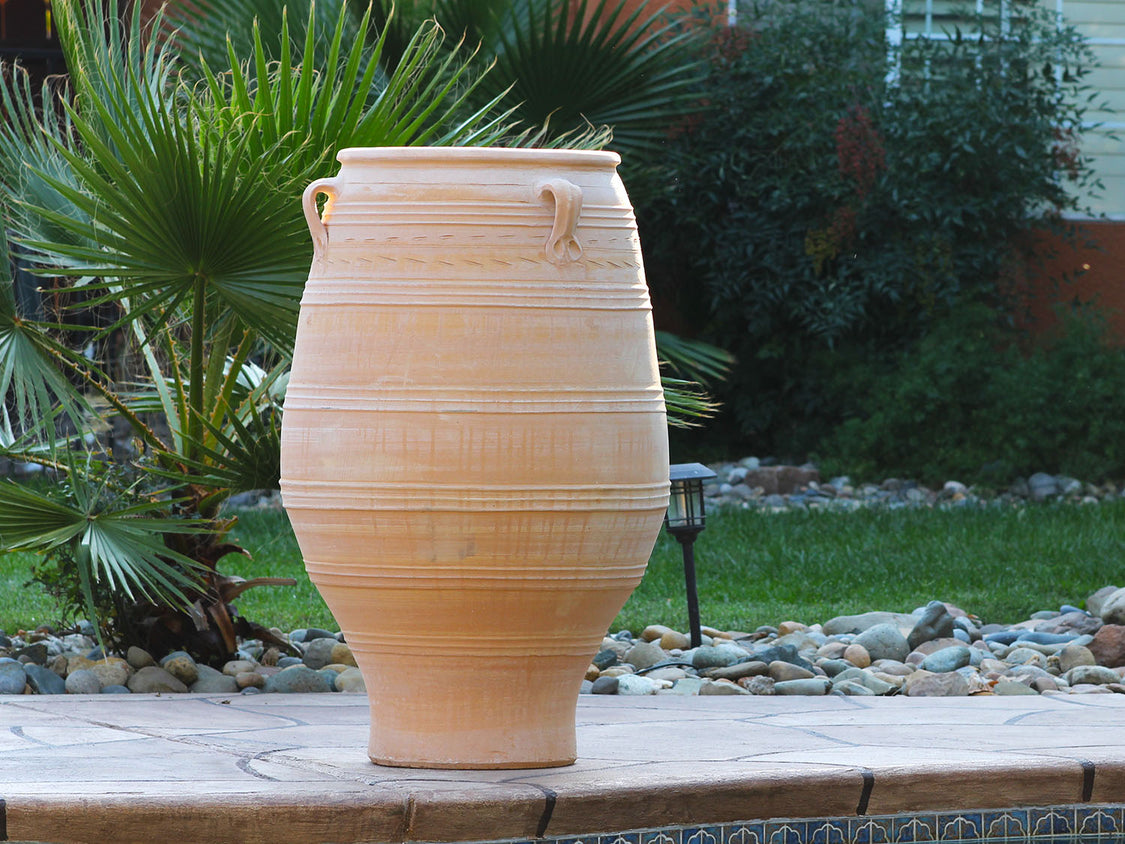
You really can't beat the Pithari Planter. It pulls inspiration right from ancient Minoan storage jars, featuring a narrow, tapered base that gracefully sweeps up to a wide, open top. At almost four feet tall (43.5 inches), it makes an amazing centerpiece for a simple courtyard or along a formal garden path. Plus, all that space inside gives deep roots room to grow and stops the soil from baking dry when the summer hits hard.
Shop Now
For Traditional Charm
The Tetrahero Urn is practically made for yards with a classic, textured look. This urn features a graceful, rounded design wrapped in detailed horizontal bands and raised, rope-like patterns. Its narrow base curves upward to a wide rim accented with traditional loop handles, bringing a beautifully soft, timeless feel to your patio or garden. The thick, sturdy build not only looks elegant but makes it a highly reliable and gorgeous focal point for your outdoor space.
Shop Now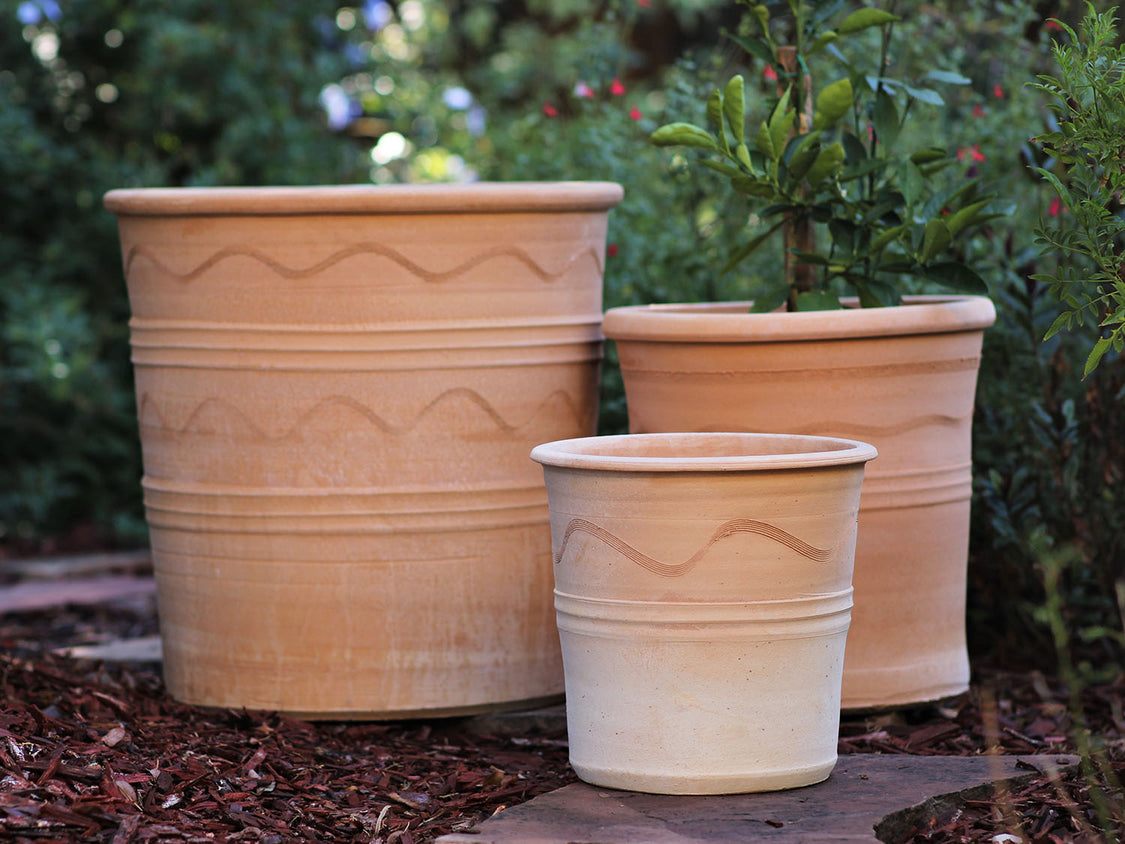
For Versatile Planting
The Panos Planter offers a beautiful, straightforward design that works anywhere in your garden. It features a gently tapered cylindrical shape decorated with classic horizontal bands and a charming wavy pattern. With its wide, open mouth and sturdy base, this handle-free design is incredibly versatile for planting everything from small citrus trees to mixed floral arrangements, bringing an effortless old-world vibe to your patio or landscape.
Shop Now
For a Rustic Look
If you love traditional charm, the Koronios Planter is right up your alley. It features a familiar beehive shape with a ribbed texture that immediately warms up the vibe of a front door, a cramped balcony, or a terraced yard.
Shop Now
For Large Plants
Finally, big trees and chunky shrubs demand oversized outdoor terracotta planters. The Exara Planter fits the bill with a wide, rounded shape that gives massive root systems the space they need. Grouping a few different sizes together can easily turn a flat concrete patio into a layered garden space.
Shop Now

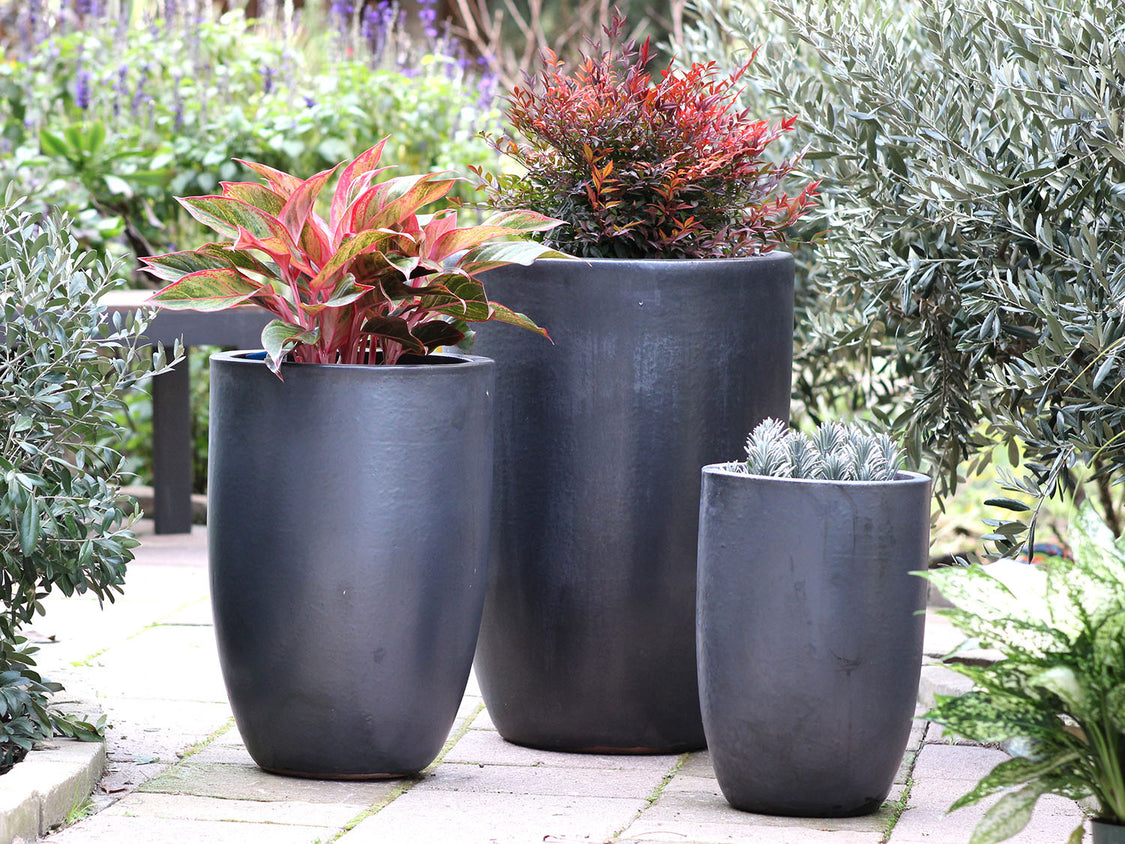
Using Mediterranean Pots in US Climates
A great thing about outdoor terracotta planters is how they change with their environment over time. Unlike plastic pots that fade and break down in the sun, high-fired clay ages well. Depending on your local climate, traditional handmade planters will develop a natural, weathered look.
In humid areas like the Pacific Northwest, soft green moss might grow on the shady side of the pot. In drier states, white mineral deposits will show where water evaporated on the outside. This chalky residue is proof that the pot is breathing and protecting your plants.
Winter care is important for American gardeners in places that freeze. High-fired Cretan clay is tough, but standing water combined with freezing and thawing can crack any ceramic pot. Lifting your pots onto clay feet ensures they drain properly. This step keeps the bottom of the pot from soaking up ground moisture that could freeze and expand during a cold snap.
A Sustainable Choice
Ditching plastic pots for natural clay is a good step toward sustainable gardening. The carbon footprint of a pot made just from earth, water, and fire is very low. It's also a zero-waste material. If a clay pot breaks, the pieces can be used as a drainage layer at the bottom of new planters. When you are ready to upgrade your yard, buying Greek terracotta planters is an eco-friendly choice. These aren't throwaway items; they are durable pots that can stay in your family garden for decades.
FAQ's
Do high-fired terracotta planters survive freezing winter temperatures?
Do high-fired terracotta planters survive freezing winter temperatures?
Yes, authentic Cretan clay pots fired at very high temperatures are usually frost-proof down to minus 4 degrees Fahrenheit (-20 degrees Celsius). However, it is important to make sure they drain well during the winter. Putting the planters on pot feet keeps the base from soaking up ground water. Keeping the soil from getting completely waterlogged will stop ice from expanding and cracking the pot.
Why does a white powdery crust form on the outside of my clay pots?
Why does a white powdery crust form on the outside of my clay pots?
That white, chalky residue is a natural process called efflorescence. Because unglazed clay is porous, it pulls extra moisture out of the soil. As the water evaporates through the walls, it leaves behind harmless salts and minerals from your tap water and fertilizer. Many landscape designers like this buildup because it makes the pot look weathered, and it proves the pot is breathing and keeping your plant roots safe from fertilizer burn.
Are concrete planters better than terracotta for outdoor gardens?
Are concrete planters better than terracotta for outdoor gardens?
While concrete is durable, it has some drawbacks for plants compared to natural clay. Concrete can slowly leak alkaline chemicals into your potting soil, raising the pH and potentially harming sensitive plants. Terracotta is chemically neutral. Also, unglazed clay breathes better and prevents the soggy soil common in solid concrete pots.
Should I paint or seal my outdoor terracotta pots?
Should I paint or seal my outdoor terracotta pots?
Landscaping experts recommend leaving authentic clay pots unpainted and unsealed. Paint or chemical sealants clog the tiny pores of the baked earth. This ruins the main benefits of the clay, stopping the moisture control that prevents root rot and insulates the soil from temperature swings.
Why are handmade terracotta pots better than machine-made versions?
Why are handmade terracotta pots better than machine-made versions?
Machine-made pots are usually mass-produced using lower firing temperatures and thinner molds. This makes them more likely to crack, flake, and suffer frost damage. Handmade Greek pots have thick walls and are fired at high temperatures in traditional kilns. This historical method hardens the clay core, creating a denser and much stronger container built to last.